Hard Water 101: Understanding Hard Water in Naperville IL
White spots on faucets, cloudy glassware, and stubborn soap residue can make everyday cleaning frustrating. Learn what causes hard water, how grains per gallon measure mineral content, and how Naperville homeowners can determine whether a water softener would help.
What Exactly Is Hard Water?
Hard water contains dissolved minerals, primarily calcium and magnesium. These minerals enter water as it moves through natural geological formations and dissolve into the supply.
Although these minerals occur naturally, they can create challenges around the house. As water evaporates, mineral residue may remain on faucets, shower doors, dishes, and other surfaces. Hard water can also interfere with soap performance and contribute to scale inside water heaters and plumbing.
For homeowners in Naperville, understanding water hardness is a useful first step toward deciding whether treatment is necessary. However, the amount of hardness depends on the water source, so it is important to understand your home's actual water conditions before choosing equipment.
What Causes White Spots and Mineral Buildup?
Have you ever washed a glass, allowed it to air dry, and noticed cloudy spots afterward? Or cleaned a faucet only to see white residue return a few days later?
Dissolved calcium and magnesium can contribute to these deposits. When water dries, some of its dissolved minerals remain behind, creating the marks that are commonly associated with hard water.
Mineral deposits may appear on:
• Bathroom faucets and showerheads.
• Glass shower doors and bathtub surfaces.
• Drinking glasses and dishes.
• Water heaters and other appliances that heat water.
• Plumbing fixtures exposed to repeated mineral accumulation.
Not every white mark comes from hard water. Soap residue, detergent, and other substances can create similar problems. If deposits continue returning, identifying the source can help you choose the right cleaning or treatment method.
What Does Grains Per Gallon Mean?
Water hardness is commonly measured in grains per gallon, abbreviated as GPG. This measurement tells you how much hardness mineral content is present in a gallon of water.
Understanding GPG makes it easier to compare water test results and determine whether a softener may be appropriate.
What Is Naperville's Water Hardness?
Naperville receives its municipal drinking water from Lake Michigan through the DuPage Water Commission. The city's published water supply information identifies Lake Michigan as its regular source.
The DuPage Water Commission reports hardness of approximately 8 GPG for its Lake Michigan water. This is a useful general reference for Naperville municipal water customers, although actual conditions may differ depending on the water supply, property, and plumbing.
You can review the city's official Water Supply information and Water Quality reports for additional details.
If your home uses a private well or a different water source, do not assume it has the same hardness level as the municipal supply. Private well water can contain substantially different concentrations of dissolved minerals and may need separate testing.
How Can Hard Water Affect Everyday Household Tasks?
Washing Dishes and Glassware
Hardness minerals can leave deposits on glassware and dishes after washing. Although dishwasher settings, detergent, and rinse aid also affect results, reducing water hardness can help limit mineral spotting.
Bathing and Showering
Hard water can interfere with soap lathering and contribute to soap scum on shower walls and fixtures. Some homeowners find that softened water makes rinsing easier and reduces the residue left behind by soap.
Laundry
Calcium and magnesium can affect how detergents perform. Depending on the water conditions and washing products, hard water may contribute to residue or fabrics that feel stiff.
A water softener can help reduce hardness related laundry problems, although detergent selection, washing temperature, and machine maintenance still matter.
Water Heaters and Appliances
Hardness minerals can accumulate as scale inside equipment that heats water. Over time, scale may affect performance and increase maintenance needs.
Reducing hardness can help limit this type of buildup, but it does not eliminate the need to maintain water heaters, dishwashers, washing machines, and other appliances according to their manufacturers' instructions.
How Can You Tell If Your Home Has Hard Water?
Visible deposits can provide clues, but testing is the most reliable way to measure hardness.
Start by checking for recurring white spots on fixtures, mineral residue on glassware, and soap that does not lather as expected. These signs may indicate hard water, but they are not conclusive by themselves.
Next, use a water hardness test kit or arrange professional testing. If you receive municipal water in Naperville, consult the city's water quality information as a general reference. A test at your property can help establish the actual hardness level.
If you already own a water softener, test both untreated water and water from a tap supplied by the softener. Comparing the results helps determine whether the system is reducing hardness effectively.
Would a Water Softener Help Your Naperville Home?
A water softener may be beneficial when water hardness causes recurring mineral deposits, soap residue, or scale buildup. Conventional salt based systems use ion exchange to remove calcium and magnesium from water.
Before purchasing a system, consider these factors:
• Measured hardness: Test the water instead of relying only on visible deposits.
• Household water use: Choose equipment with a capacity appropriate for your household.
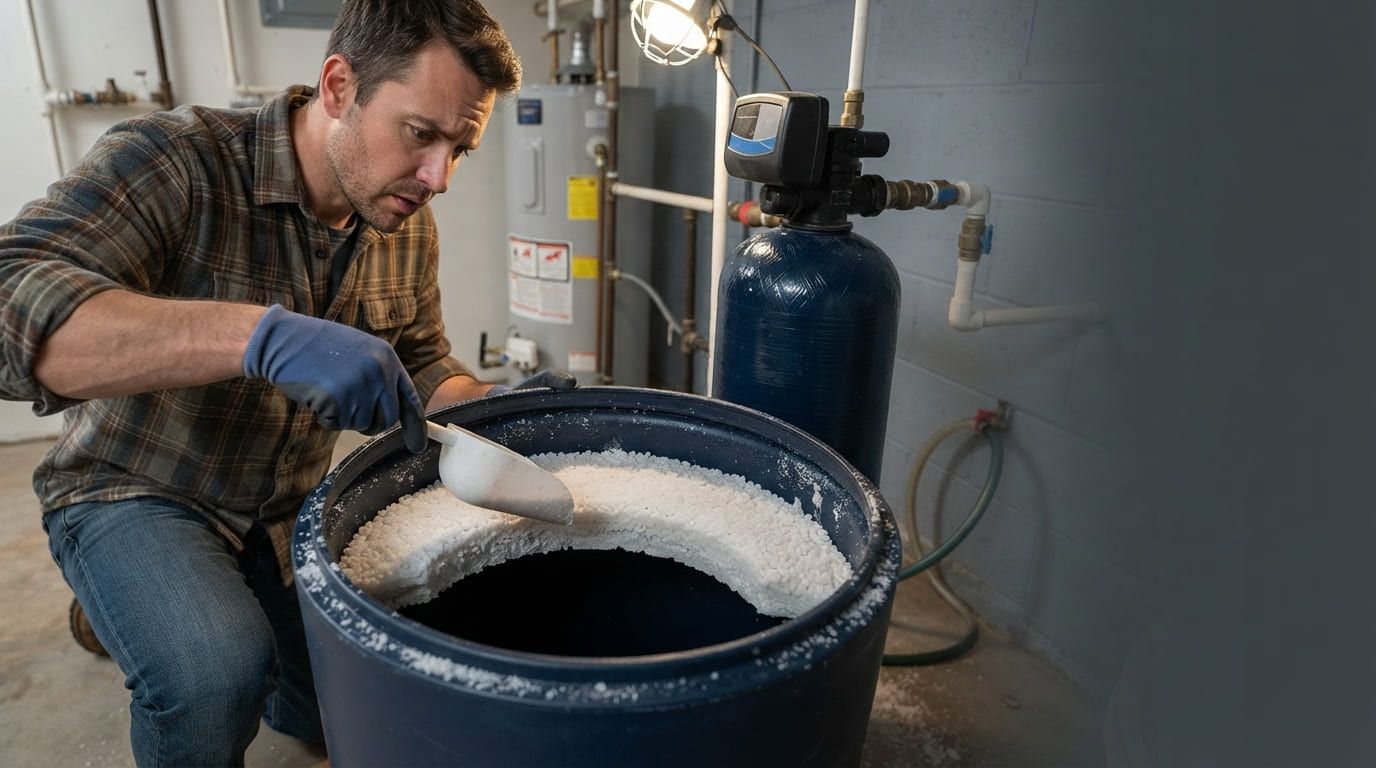
• Maintenance requirements: Conventional salt based softeners require salt replenishment and periodic maintenance.
• Other water concerns: Iron, sediment, odors, and other contaminants may require additional treatment.
Not every home needs a water softener. The right decision depends on the water test results, household preferences, and the problems you are trying to address.
What Should You Do If You Already Have a Water Softener?
If mineral spots and residue continue appearing after installing a softener, check whether the equipment is operating properly before replacing it.
Confirm that the brine tank has an appropriate salt supply and that the bypass valve is in the correct position. Review the regeneration schedule and make sure the hardness setting matches your incoming water.
If these checks do not resolve the problem, test the treated water. Persistent hardness may indicate an issue with regeneration, the control valve, the resin, or another system component.
Remember that a softener primarily reduces calcium and magnesium. It is not designed to remove every contaminant, and it cannot prevent every type of household stain.
Understand Your Water Before Choosing a Solution
Hard water can affect cleaning, laundry, plumbing fixtures, and appliances, but the severity depends on the actual mineral content of your water. Learning how GPG measurements work and identifying the source of recurring deposits can help you avoid unnecessary equipment purchases.
For homeowners in Naperville, IL, the best first step is to understand the water supplied to your property and test it if you suspect a problem. With accurate information, you can decide whether a water softener or another treatment option makes sense for your household.
Naperville Water Softener helps homeowners understand water hardness concerns and explore suitable water treatment options. Whether you are dealing with mineral deposits or evaluating a softening system, getting the right information can help you make a more informed decision about your home's water.